Leaks and emergencies
Frozen and Burst Pipes in Richmond: What to Do
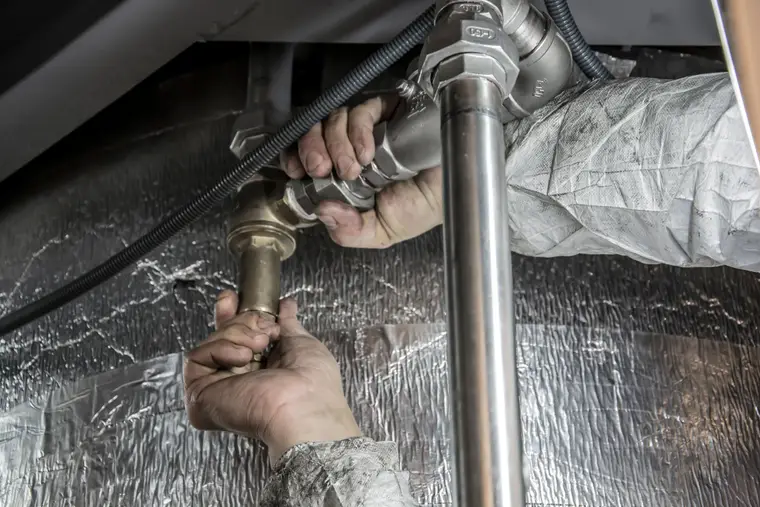
Frozen and burst pipes in Richmond are not an every-winter certainty, which is exactly why they catch people out. Most of the season is mild enough that nobody thinks about the pipes. Then a cold front comes through, the temperature stays well below freezing for a night or two with a hard wind, and by the next morning the phones are ringing across the city and both counties. Knowing which pipes are at risk and what to do in the first few minutes makes a big difference to how much damage a frozen pipe does.
Which pipes freeze
Pipes inside the heated part of a house rarely freeze. The ones that do are the ones that sit close to the cold:
- Crawl space lines. Many houses in Henrico and Chesterfield have supply pipes running under the floor, with only the crawl space walls between them and the outside air. An open vent or a gap in the insulation is enough.
- Outside walls. A kitchen sink or a bathroom on an outside wall, especially one facing north or into the wind, has pipes in the coldest part of the wall.
- Garages and porches. Water heaters, laundry lines and pipes to a garage sink or an enclosed porch sit in spaces that may not be heated at all.
- Outside faucets. A hose left connected traps water in the faucet, and an older faucet that isn’t the frost-free kind can freeze and split inside the wall.
- Older row houses. In some older Richmond houses, pipes were run where it was convenient decades ago, not where they would stay warm, and later additions may have put a bathroom over an unheated space.
Signs a pipe has frozen
The first sign is usually a faucet that gives only a trickle or nothing at all while the others work. You may see frost on an exposed pipe, or feel a section that is much colder than the rest. If one faucet is dead on a very cold morning and the rest of the house has water, assume the line to it is frozen and act before it thaws.
What to do about a frozen pipe
- Open the faucet the pipe feeds, both hot and cold, so water can flow once the ice starts to melt and pressure has somewhere to go.
- Find the frozen section if you can. It is usually where the pipe runs through the coldest space.
- Warm it gently with a hair dryer, a heating pad or a space heater kept well clear of anything that can burn. Start near the faucet and work back toward the ice.
- Keep warming until full flow returns, then leave the faucet dripping until the cold has passed.
Never use an open flame, a torch or a propane heater on a pipe. It can damage the pipe, start a fire in the framing around it and, on plastic pipe, melt it. If you can’t reach the frozen section or nothing changes after a reasonable time, call a plumber.
When a pipe has burst
A burst pipe is a race against the clock, so the order matters:
- Shut off the main water valve. In most houses it is where the line enters through the foundation, in the basement, crawl space or a utility closet. If it won’t turn, the valve at the meter by the street also stops the water, though it may need a meter key.
- Turn off the water heater. Set the gas to pilot or switch off the breaker for an electric heater, so it doesn’t heat an empty tank.
- Open the faucets on the lowest level to drain the water left in the pipes.
- Keep away from electricity. If water is near outlets, a light fixture or the electrical panel, stay out of that room and switch the circuit off at the breaker only if it is safe to reach.
- Take photos of the damage before anything is moved, then start moving belongings out of the water.
- Call a plumber. Tell them the water is off. That changes how urgent the visit is and often the price of it.
What the repair involves
Most burst pipes split along a short section. The plumber opens the wall or ceiling only where needed, cuts out the damaged piece and replaces it, then checks the rest of that run for weak spots before turning the water back on. Pipes that froze once will freeze again if nothing changes, so the repair usually includes insulating the run, sealing the gap that let the cold in or rerouting a short section into a warmer space.
If a house has several old or brittle lines, a freeze often exposes more than one weak spot. In that case you get a price for the immediate repair and a separate written price for the wider work, such as replacing old polybutylene supply or a run of failing galvanized pipe, so you can plan it without being rushed.
Getting ready before the next cold snap
A few small jobs in the fall prevent most frozen pipe calls:
- Disconnect garden hoses and drain the outside faucets. If you have older faucets that aren’t frost-free, shut off their inside valves and leave the outside faucet open.
- Close crawl space vents for the hardest freezes and make sure the crawl space door shuts properly.
- Insulate exposed pipes in the crawl space, garage and any unheated room with foam pipe sleeves.
- Seal gaps where cold air reaches pipes, such as around a dryer vent or where a line comes through the foundation.
- Find your main shut-off and test it. A valve that hasn’t been turned in years may not turn when you need it.
- If you travel in winter, leave the heat on and consider turning off the main while you are gone.
When to call us
Call us if a pipe has burst, if water is coming through a ceiling or a wall, or if a frozen pipe is somewhere you can’t reach safely. Our emergency plumbing service answers at night and on weekends, with the after-hours rate told to you before we come. For pipes that have frozen more than once, a leak repair visit can include a walk through the house to find the lines most at risk, and our repiping page explains when old pipe is worth replacing.
We work across Richmond, Glen Allen and Midlothian, where crawl space pipes on wooded lots are often the first to freeze.
Questions about this guide
How cold does it have to be for pipes to freeze?
There is no single number, because it depends on where the pipe runs and how long the cold lasts. Pipes in crawl spaces, outside walls, garages and unheated porches are at risk on any night that stays well below freezing, especially with wind. A short dip below freezing rarely causes trouble; a long, windy night does.
Why did the pipe only start leaking after it warmed up?
Ice holds the crack closed while the pipe is frozen. When it thaws, water flows through the split and the leak appears. That is why burst pipe calls in Richmond often come the morning after the coldest night, not during it.
Should I let my faucets drip?
On a faucet fed by a pipe you know is at risk, a slow drip of both hot and cold helps, because moving water is harder to freeze and an open faucet relieves pressure if ice does form. There is no need to run every faucet in the house.